If you just got a new tattoo and it feels excited you this tattoo aftercare to make make sure your tattoo stay healthy. Lets say you finally have the design you wanted on your skin. You take pictures. You show your friends. You spend the first few hours looking at the tattoo from different angles.
Then another thought usually comes in: “Okay, so how do I take care of this thing now?”
That question is more important than many first-time tattoo clients realize.
A fresh tattoo is not simply a finished piece of artwork. Tattooing breaks the skin and places pigment into the dermis, which means the area needs time to recover. What you do during this healing period can affect your comfort, the condition of your skin, and the final appearance of the tattoo.
That is where tattoo aftercare comes in. Good aftercare does not have to be complicated. You need to keep the area appropriately clean, avoid unnecessary irritation, moisturize when needed, protect the healing skin, and pay attention to signs that are outside the normal healing process.
This guide explains exactly how to approach tattoo aftercare from the first day through the healing period and beyond.
If you want additional personalized guidance, you can also visit TattooAftercare.com.ng for practical tattoo-care information and support.
What Is Tattoo Aftercare?
Tattoo aftercare is the routine you follow after getting a tattoo to help the tattooed skin recover properly.
It includes things such as:
- Cleaning the tattoo
- Washing your hands before touching it
- Following your tattoo artist’s instructions about the covering
- Keeping the skin appropriately moisturized
- Avoiding unnecessary friction
- Avoiding scratching and picking
- Protecting the tattoo from excessive sunlight
- Avoiding swimming while the tattoo is still healing
- Watching for unusual redness, swelling, pain or discharge
- Getting medical attention when symptoms suggest an infection or another complication
The important thing to understand is that there is no single aftercare routine that fits every tattoo perfectly.
The location, size and style of the tattoo, the type of dressing or film used, your skin, and your tattoo artist’s instructions can all affect the routine.
Research conducted by National Center for Biotechnology information shows that tattoo aftercare advice varies considerably. One study examined 700 tattoo aftercare instructions from all 50 U.S. states and Washington, D.C. and found substantial variation in the recommendations. The researchers also noted that many instructions did not clearly explain hygiene or when someone should seek medical care.
That is one reason you should not blindly copy a random TikTok, Instagram or forum routine. You need to understand the principles first.
Why Is Tattoo Aftercare So Important?
A tattoo involves repeatedly placing needles through the skin.
That process creates thousands of tiny punctures. Your body then begins repairing the affected skin.
During this period, the tattoo may:
- Feel sore
- Look red
- Feel warm
- Produce a small amount of clear fluid
- Become itchy
- Peel
- Develop some scabbing
- Feel dry or tight
Some of these changes can be normal.
The problem begins when someone mistakes normal healing for a reason to interfere with the tattoo.
For example, scratching a peeling tattoo may feel satisfying for five seconds, but it can irritate the skin and interfere with healing.
Similarly, repeatedly washing the tattoo or covering it with thick layers of random products does not automatically make it heal faster.
The goal is not to do more is to care for the skin appropriately while allowing the healing process to happen.
Tattoo Aftercare Statistics You Should Know
There is a lot of tattoo advice online, but all you will take into consideration.
Tattoos are common
A systematic review of tattoo-related bacterial infections reported that tattoo prevalence among adults in industrialized countries was around 10%–20%.
That means tattoo aftercare is not a niche subject.
Millions of people need reliable information about caring for tattooed skin.
Infection estimates vary
Published research has estimated tattoo-related skin infection rates in the range of approximately 0.5%–6%, although researchers emphasize that accurate infection rates are difficult to establish because tattoo complications are not consistently reported.
So you should not interpret one percentage as the exact probability that your tattoo will become infected.
Instead, understand the bigger point:
Tattoo infections are possible, and hygiene and appropriate wound care matter.
One study found 3.2% had experienced an infected tattoo
In a cross-sectional study involving 501 tattooed participants, 3.2% reported a history of an infected tattoo. The same study found that 21.2% reported having experienced an itchy tattoo.
These figures are from a specific study population and should not be treated as a universal rate.
Long-term skin reactions are also worth understanding
A Danish population-based study involving 5,914 tattooed individuals found that 10.2% had experienced tattoo-associated skin reactions occurring beyond the first three weeks after getting tattooed. The study also found higher odds of reactions among tattoos containing colors other than black.
That does not mean 10.2% of all tattoos become problematic.
It shows why tattoo care should not stop simply because the initial peeling has finished.
Tattoo complications are broader than infections
A systematic review covering 104 studies found reports involving infections, inflammatory reactions, and other tattoo-related complications. Among the included studies, 45 reported infections and 53 reported inflammatory reactions.
How Long Does a Tattoo Take to Heal?
People often want one exact number.
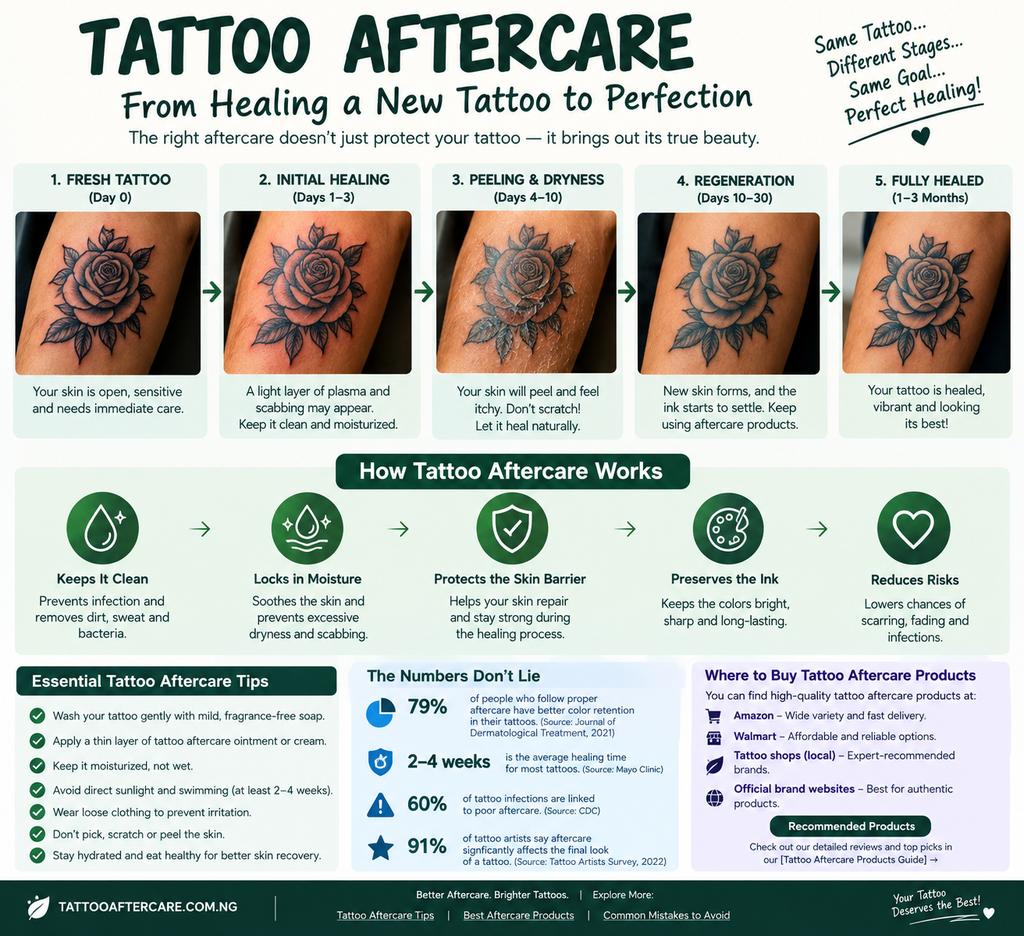
The surface of a tattoo can appear much better within a one weeks, while deeper skin recovery can take longer.
During the early stage, you may notice:
First few days:
Soreness, redness, warmth, mild swelling and some fluid can occur.
First week:
The tattoo may become dry, itchy or start peeling.
Following weeks:
Peeling and irritation generally settle as the outer skin continues recovering.
The appearance can also change during healing.
A tattoo may temporarily look dull, cloudy or less vibrant than it did immediately after the appointment.
Do not panic. Healing skin can change the way the tattoo looks. Your job is to avoid unnecessary interference.
Tattoo Aftercare: What To Do Immediately After Getting Tattooed
This are five things you should do immediately after getting a tattoo:
5 Things to Do Immediately After Getting a Tattoo
- Keep the tattoo covered: Leave the bandage or protective film on for the time recommended by your tattoo artist.
- Wash your hands first: Always clean your hands before touching your new tattoo to reduce the risk of introducing bacteria.
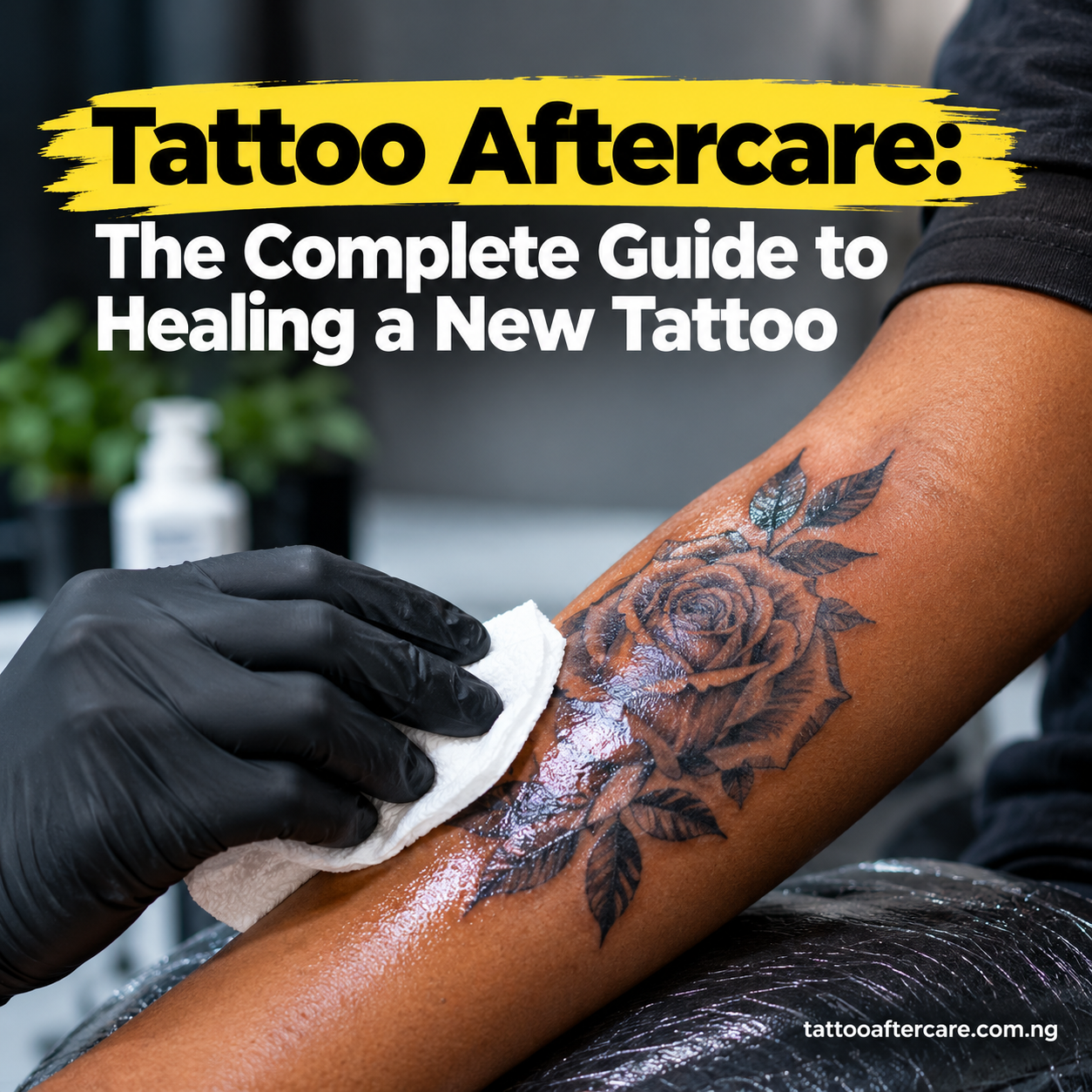
- Gently clean the tattoo: Once you’re instructed to remove the covering, wash the area gently with lukewarm water and a mild, fragrance-free soap. Don’t scrub.
- Pat it dry: Use a clean paper towel or allow it to air-dry. Avoid rubbing the fresh tattoo with a regular towel.
- Apply a thin layer of aftercare product: Use the moisturizer or tattoo aftercare product recommended by your artist. Avoid applying a thick layer that leaves the tattoo overly greasy.
If you are unsure about your routine, TattooAftercare.com.ng offers tattoo aftercare guidance and consultations.
How Should You Clean a New Tattoo?
Cleaning is one of the most important parts of tattoo aftercare.
Start with clean hands.
Then follow the instructions given by your tattoo artist regarding when the covering should be removed and how the tattoo should be cleaned.
When cleaning:
- Wash your hands first.
- Use a gentle cleaning approach.
- Avoid aggressive rubbing.
- Rinse appropriately.
- Pat the area dry rather than scrubbing it.
- Apply your recommended aftercare product if appropriate.
The objective is to clean the tattoo without repeatedly traumatizing the healing skin.
Should You Scrub a New Tattoo?
No. Do not use aggressive scrubbing to try to remove flakes, scabs or dried material.
Your tattoo is healing. Let the skin do its job.
Should You Moisturize a New Tattoo?
Moisturizing can help when tattooed skin becomes dry.
The American Academy of Dermatology recommends using a water-based lotion or cream when tattooed skin feels dry. It also warns that petroleum-based products can contribute to tattoo ink fading.
The key phrase is:
When the skin feels dry.
You do not need to cover your tattoo in a huge layer of product.
A thin, appropriate layer is generally more sensible than creating a thick, greasy coating. If you are unsure what product to choose, consider factors such as:
- Fragrance
- Ingredients
- Your skin sensitivity
- Your tattoo artist’s instructions
- Whether the product is intended for tattoo aftercare
- Whether you are applying it to freshly healing or fully healed skin
TattooAftercare.com.ng’s product guidance also covers moisturizers, gentle cleansers, tattoo balms, fragrance-free products and aftercare kits.
This are the Best Tattoo Aftercare Product
For this are the best best tattoo aftercare product so far:
- Aquaphor Healing Ointment: popular fragrance-free option for the early healing stage.
- CeraVe Healing Ointment: fragrance-free and contains ceramides to support the skin barrier.
- Hustle Butter Tattoo Aftercare Balm: petroleum-free tattoo balm with shea butter and other moisturizing ingredients.
- Tattoo Goo Tattoo Balm: dedicated tattoo aftercare balm and a more budget-friendly option.
- Vanicream Moisturizing Ointment: fragrance-free option that can suit people with sensitive skin.
- Dove Sensitive Skin Beauty Bar: gentle, fragrance-free cleansing option for washing a healing tattoo.
- SecondSkin Foaming Tattoo Wash: fragrance-free tattoo cleanser designed for sensitive skin.
- Tattoo Goo Deep Cleansing Soap: tattoo-specific cleanser for keeping the area clean during healing.
Can I Use Coconut Oil on a New Tattoo?
People often recommend coconut oil as a natural tattoo moisturizer.
But “natural” does not automatically mean best. If you are considering coconut oil, think about whether your skin tolerates it and whether your tattoo artist or healthcare professional has recommended it.
Do not assume that every natural oil is appropriate for freshly healing tattooed skin.
When in doubt, keep your routine simple.
Why Is My Tattoo Peeling?
Peeling is one of the most common things people notice during tattoo healing.
Your skin is recovering. As the outer layers repair themselves, dead skin can shed.
That can make the tattoo look flaky. This does not automatically mean something has gone wrong.
The important rule is:
Do not pull the peeling skin off.
Let it fall away naturally.
Why Is My Tattoo So Itchy?
Itching can occur during normal healing. In fact, itching was reported by 21.2% of participants in one study of 501 tattooed people.
The worst thing you can do is repeatedly scratch the tattoo.
Instead:
- Keep your hands away from it.
- Avoid picking.
- Follow your moisturizing routine.
- Wear clothing that does not constantly rub against the tattoo.
- Keep the area appropriately clean.
If itching becomes severe or appears together with unusual swelling, spreading redness, pus, fever or worsening pain, get medical advice.
Can I Scratch My New Tattoo?
No. Even when the itching becomes annoying, scratching is not a good tattoo aftercare strategy.
Scratching can irritate the skin and interfere with the healing process. You should also avoid picking scabs. Let your skin heal naturally.
Can I Shower With a New Tattoo?
In most cases, showering is different from soaking. You can generally follow your tattoo artist’s instructions about showering and cleaning.
The bigger concern is prolonged soaking while the tattoo is healing. Avoid turning your new tattoo into a swimming-pool experiment.
When showering:
- Avoid unnecessarily hot water.
- Don’t scrub the tattoo.
- Don’t direct aggressive water pressure onto the area.
- Follow the cleaning instructions you were given.
- Pat the tattoo dry afterward.
Can I Swim With a Fresh Tattoo?
Avoid swimming while your tattoo is healing.
That means being careful with:
- Swimming pools
- Rivers
- Lakes
- Beaches
- Hot tubs
A fresh tattoo involves damaged skin, and unnecessary exposure to water and potentially contaminated environments is not worth the risk. Wait until the tattoo has properly healed before returning to swimming.
Can I Go to the Gym With a New Tattoo?
This depends on the tattoo’s location, your workout, sweating, friction and the condition of the tattoo.
The bigger issue is not simply exercise. It is what exercise exposes the healing tattoo to.
For example, a tattoo that repeatedly rubs against gym equipment or clothing deserves more caution. Sweat and friction can also make an irritated tattoo uncomfortable.
If you decide to exercise during healing, avoid activities that create unnecessary rubbing, pressure or contamination around the tattoo.
Can I Expose My New Tattoo to the Sun?
This is a big one. Fresh tattoos should be protected from unnecessary sun exposure while they heal.
Once the tattoo is healed, sun protection remains important.
The American Academy of Dermatology recommends a broad-spectrum, water-resistant sunscreen with SPF 30 or higher for tattooed skin exposed to sunlight. It recommends applying sunscreen 15 minutes before going outside and reapplying at least every two hours.
UV exposure can fade tattoo ink.
So if you spent money getting a tattoo you love, protecting it from the sun makes sense.
When Can I Put Sunscreen on a New Tattoo?
Do not treat sunscreen as a replacement for healing protection.
Freshly tattooed skin needs to recover. Once the tattoo has healed sufficiently, sunscreen becomes an important part of long-term tattoo care.
During the initial healing stage, protect the area from direct sunlight using appropriate physical coverage and by avoiding unnecessary exposure.
For long-term care, SPF 30+ broad-spectrum sunscreen is a useful habit.
Normal Tattoo Healing vs Possible Infection
| Normal healing can include | Warning signs that need attention |
|---|---|
| Mild redness | Spreading redness |
| Mild soreness | Increasing or severe pain |
| Mild swelling | Significant swelling |
| Clear fluid | Pus |
| Itching | Severe worsening symptoms |
| Peeling | Open sores |
| Some scabbing | Fever or chills |
| Temporary dryness | Symptoms getting progressively worse |
We can help you understand normal healing, but a healthcare professional should assess suspected infection or significant medical complications.
Tattoo Aftercare for Different Body Parts
Not every tattoo behaves the same way.
Hand Tattoos
Hands experience frequent washing, movement and environmental exposure.
You may need to pay extra attention to cleanliness and friction.
Foot Tattoos
Foot tattoos experience pressure, sweating and friction from socks and shoes.
Choose footwear carefully during healing.
Finger Tattoos
Fingers are constantly moving and exposed to washing and friction.
Follow your artist’s instructions closely.
Arm Tattoos
Arm tattoos are usually easier to protect, but clothing and sunlight can still affect them.
Chest Tattoos
Sleeping position and clothing may become more important.
Back Tattoos
Sleeping and clothing can create friction.
Leg Tattoos
Pay attention to clothing, movement, sweating and sun exposure. The location of the tattoo should influence your routine.
A Simple Tattoo Aftercare Routine
If you want to keep things simple, think about tattoo aftercare in five stages.
Step 1: Clean
Keep the tattoo appropriately clean according to your artist’s instructions.
Step 2: Dry
Pat it dry gently. Don’t scrub.
Step 3: Moisturize When Appropriate
If the skin becomes dry, use a suitable moisturizer.
Step 4: Protect
Avoid unnecessary friction, soaking and excessive sun exposure.
Step 5: Monitor
Pay attention to changes. If symptoms become progressively worse, seek professional medical advice. That’s the foundation.
Tattoo Aftercare Checklist
Save this checklist if you just got tattooed:
Day-to-day tattoo aftercare checklist
☐ Wash your hands before touching the tattoo
☐ Follow your artist’s covering instructions
☐ Clean the tattoo appropriately
☐ Avoid aggressive rubbing
☐ Pat the area dry
☐ Moisturize when appropriate
☐ Don’t scratch
☐ Don’t pick scabs
☐ Avoid swimming while healing
☐ Avoid unnecessary sun exposure
☐ Wear clean, comfortable clothing
☐ Avoid excessive friction
☐ Monitor for unusual symptoms
☐ Seek medical help if infection is suspected
Frequently Asked Questions About Tattoo Aftercare
How long should I moisturize my tattoo?
Continue following your tattoo artist’s instructions while the tattoo heals. If the skin remains dry afterward, you can continue using a suitable moisturizer as part of normal skincare.
How many times a day should I wash my tattoo?
There is no universal number that applies to everyone. Follow your artist’s instructions and avoid both neglecting hygiene and excessive washing.
Why is my tattoo itchy?
Itching can occur during normal healing as the skin becomes dry and peels. Avoid scratching.
Why is my tattoo peeling?
Peeling can be part of the normal healing process. Do not pull the skin off.
Can I go swimming after getting a tattoo?
Avoid swimming while the tattoo is healing. Pools, lakes, oceans and hot tubs can expose healing skin to unnecessary risks.
Can I exercise after getting a tattoo?
Exercise may be possible depending on the tattoo’s location and the activity, but avoid excessive sweating, friction, pressure and contamination around the healing tattoo.
Can I sleep on my tattoo?
Try to minimize pressure and friction on the tattoo. Keep your bedding clean.
Can I use Vaseline on my tattoo?
The AAD advises against petroleum-based products for tattooed skin because they can cause ink to fade.
When can I use sunscreen on my tattoo?
Protect a fresh tattoo from unnecessary sun exposure while it heals. Once healed, use broad-spectrum SPF 30 or higher when exposed to sunlight.
What does an infected tattoo look like?
Warning signs can include spreading redness, worsening pain, pus, fever, chills and open sores. Seek medical attention if these occur.
Can tattoos cause allergic reactions?
Yes. Allergic reactions to tattoo ink can occur immediately or years after tattooing.
Is redness normal after a tattoo?
Some initial redness can be normal. Redness that spreads or becomes increasingly severe is more concerning.
Is swelling normal after tattooing?
Some mild swelling can occur. Significant or worsening swelling should be assessed, especially when accompanied by other concerning symptoms.
What is the best tattoo aftercare cream?
There isn’t one universal cream that is best for everyone. Choose an appropriate product based on your skin, the healing stage and professional guidance.
Can I put oil on my tattoo?
Don’t assume every oil is appropriate for healing tattooed skin. Follow your artist’s instructions and choose products carefully.
Should I cover my tattoo when sleeping?
Follow your tattoo artist’s instructions about the initial covering. After that, focus on keeping the tattoo clean and avoiding unnecessary friction.
Also Check
7 Tips for Proper Healing of Your New Tattoo
Ambition Ninja Wireless Tattoo Pen Machine – Dual Battery Review: Is It Worth Buying?
Need Help With Your Tattoo Aftercare?
If you have just gotten a tattoo and you’re unsure what to do next, TattooAftercare.com.ng provides practical information and tattoo aftercare support.
You can also explore the site’s Tattoo Aftercare Services for guidance covering cleaning, moisturizing, tattoo healing stages, peeling, itching, product selection and common aftercare concerns.
The goal isn’t to make tattoo aftercare complicated.
The goal is to help you understand what your skin needs while it heals.
A good tattoo deserves good aftercare. And the best time to start caring for it is the moment you leave the tattoo studio.





2 responses to “Tattoo Aftercare: The Complete Guide to Healing a New Tattoo, Avoiding Infection & Keeping Your Ink Looking Good”
[…] my last post tattoo Aftercare: The Complete Guide to Healing a New Tattoo i saw so many people asking How to Sleep With a Fresh Tattoo Without Damaging It and i want to […]
[…] Choosing the right soap is only half the job. This are step by step how to wash a fresh tattoo You can check my previous post on Tattoo Aftercare: The Complete Guide to Healing a New Tattoo, Avoiding Infection & Keeping Your …. […]