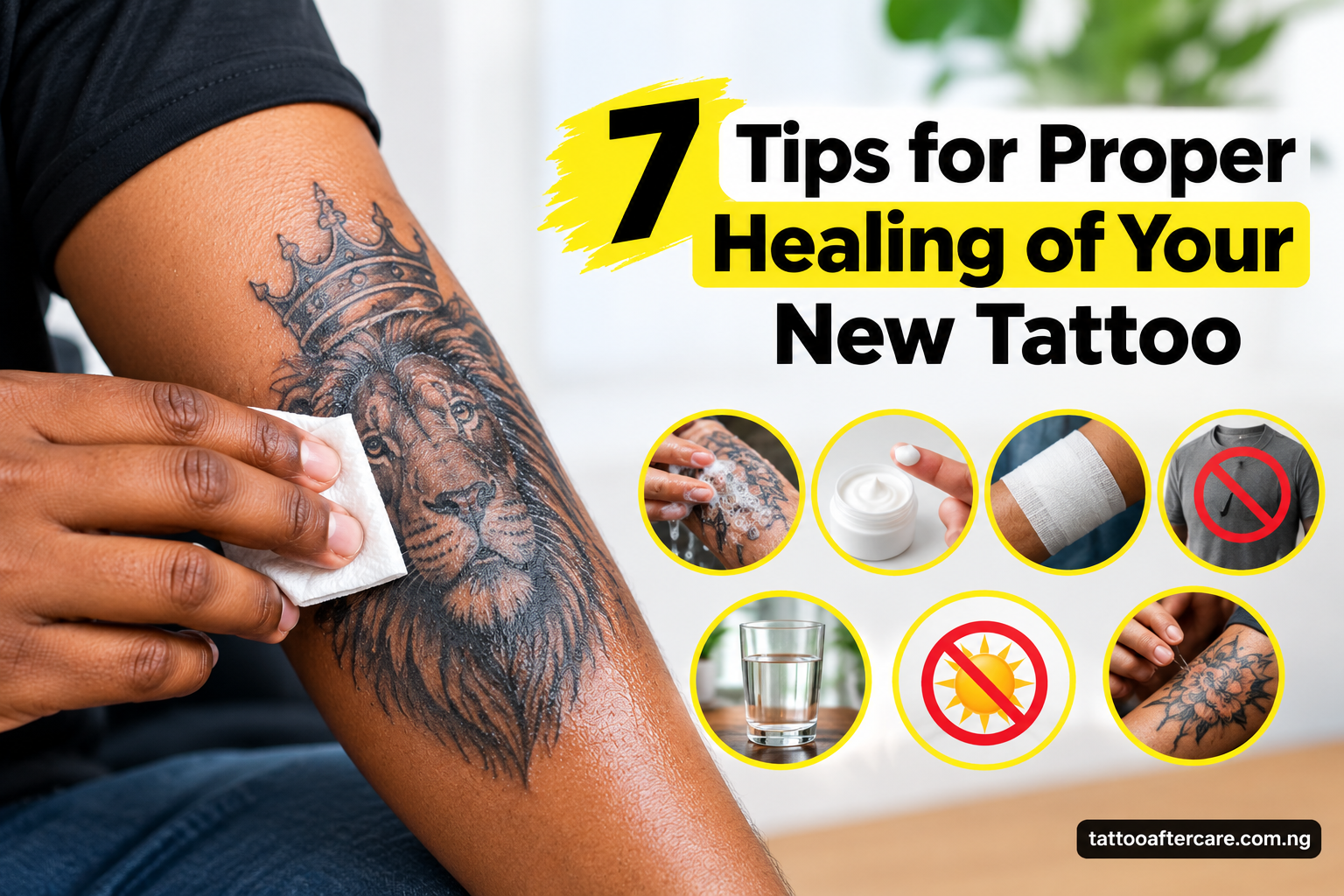
This 7 Tips for Proper Healing of Your New Tattoo is what everyone who is planning to get a tattoo needs. Getting a new tattoo is exciting. You have finally put an idea, memory, symbol, or piece of art on your skin. But once you leave the tattoo studio, the responsibility of taken care of this tattoo relies on you.
The artist has done their part. Now your aftercare routine matters.
A fresh tattoo is not simply a finished piece of artwork. Tattooing creates controlled trauma to the skin, which means the area needs time and proper care to recover. Dermatologists describe tattoos as a form of skin trauma that requires appropriate aftercare to support healing.
In my experience, one of the biggest mistakes people make is treating a new tattoo like ordinary skin. They wash it too aggressively, apply too much product, scratch the peeling skin, expose it to the sun, or jump into a swimming pool too soon.
That is why I created this guide. If you have just been tattooed and want to know how to properly heal a new tattoo, these are the seven things I want you to get right.
What Is the Proper Way to Heal a New Tattoo?
The proper way to heal a new tattoo is to keep the area clean, avoid unnecessary irritation, moisturize appropriately, protect it from excessive sun exposure and soaking, avoid picking or scratching, and pay attention to signs that something may be wrong. This 7 Tips for Proper Healing of Your New Tattoo covers everything you need know.
At tattooaftercare.com.ng our instructions is part of your routine, especially because our bandage types and aftercare recommendations is different from what you get else where.
For additional guidance throughout the healing process, you can also visit Tattoo Aftercare, where I provide practical information about washing, moisturizing, peeling, sleeping, showering, sun exposure, and other common tattoo-healing concerns.
Now let’s get into the seven tips.
7 Tips for Proper Healing of Your New Tattoo
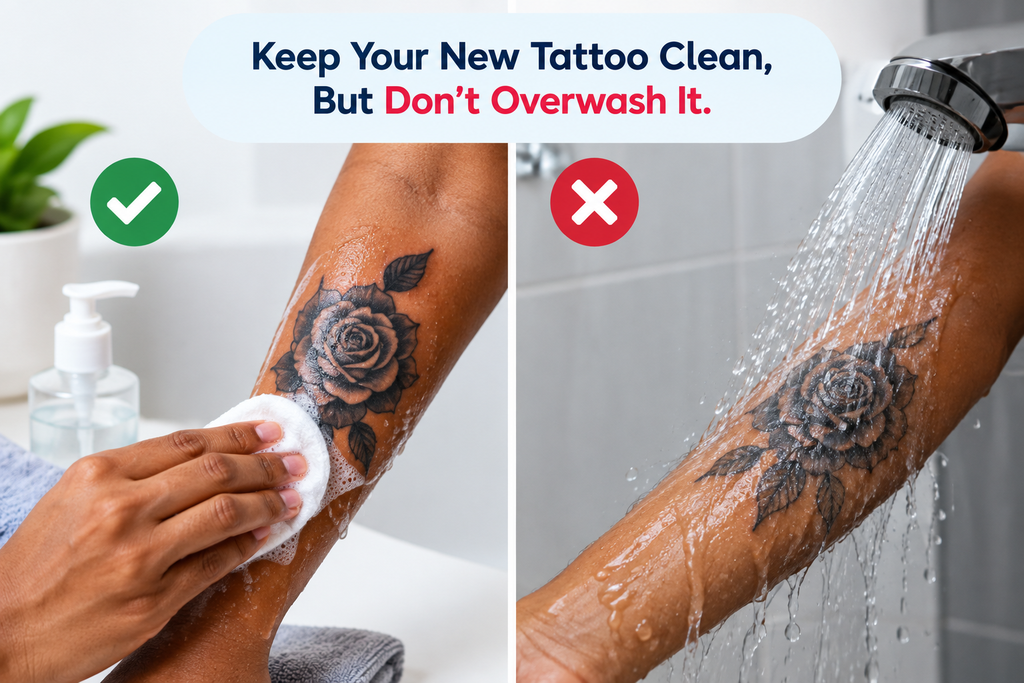
1. Keep Your New Tattoo Clean, But Don’t Overwash It
The first rule I always emphasize is simple: keep your tattoo clean without being aggressive with it.
A fresh tattoo has broken skin, so hygiene matters. But cleaning does not mean scrubbing the tattoo until it feels completely clean.
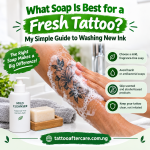
Start by washing your hands before touching the tattoo. When it is time to clean the tattoo according to your artist’s instructions, use lukewarm water and a gentle, fragrance-free cleanser. Clean the area carefully rather than rubbing or scrubbing it.
After washing, pat the tattoo dry with something clean rather than dragging a towel across it.
The goal is not to constantly interfere with the tattoo. The goal is to keep the healing area clean while allowing your skin to do what it naturally does: repair itself.
I personally recommends gentle washing and notes that a new tattoo may experience some soreness, redness, flaking and scabbing as part of normal healing. Other institutions like Cleveland Clinic also recomment the same thing.
One mistake I see people make
They think more cleaning means faster healing.
It doesn’t.
Overwashing or constantly touching your tattoo can irritate already-sensitive skin. Give your tattoo a routine rather than turning its aftercare into an hourly activity.
2. Moisturize Your Tattoo Without Drowning It in Lotion
Once your tattoo starts drying out, you will notice tightness, itching or flaking.
This is where moisturizing becomes important.
However, more moisturizer does not mean better healing.
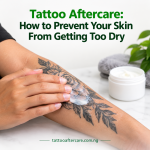
Apply a thin layer of an appropriate moisturizer according to your tattoo artist’s instructions. Your skin should not be covered in a thick, greasy layer that stays wet for hours. Look at the image bellow:
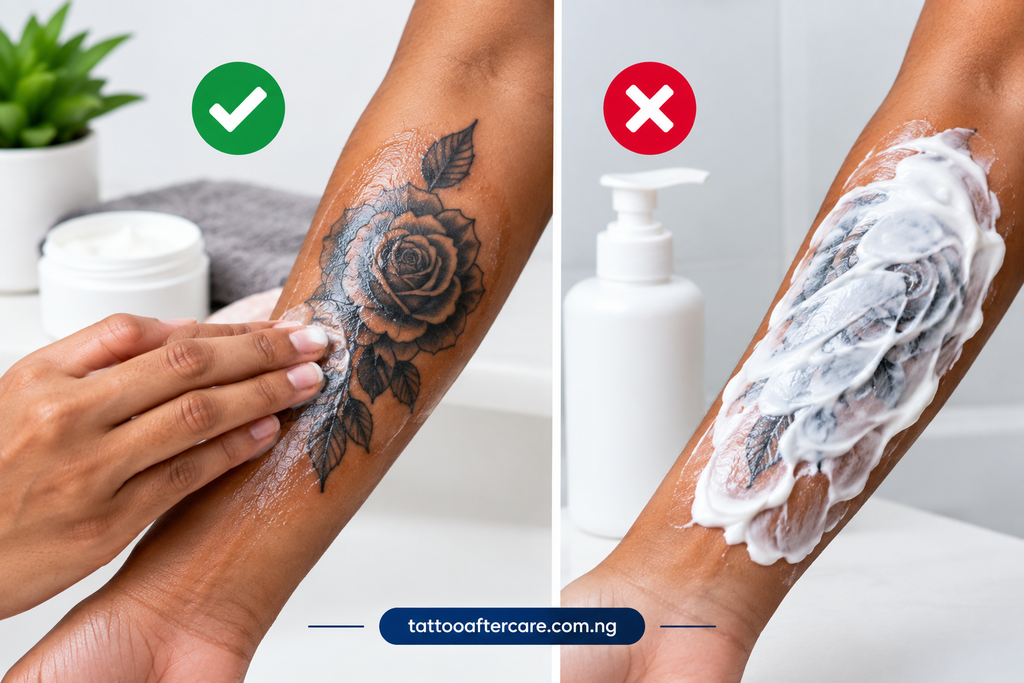
Dermatologists recommend using a water-based lotion or cream when tattooed skin feels dry. The American Academy of Dermatology also advises against petroleum-based products because they can contribute to tattoo fading.
I prefer to think of moisturizing as supporting the skin rather than coating the tattoo.
Your tattoo needs care, but it also needs breathing room.
What should you look for in a tattoo moisturizer?
Look for a product that is:
- Gentle on sensitive skin
- Fragrance-free or low-irritant
- Easy to spread
- Appropriate for healing skin
- Recommended by your tattoo artist or healthcare professional when necessary
If a product causes burning, worsening redness, a rash or significant irritation, stop using it and seek appropriate professional advice.
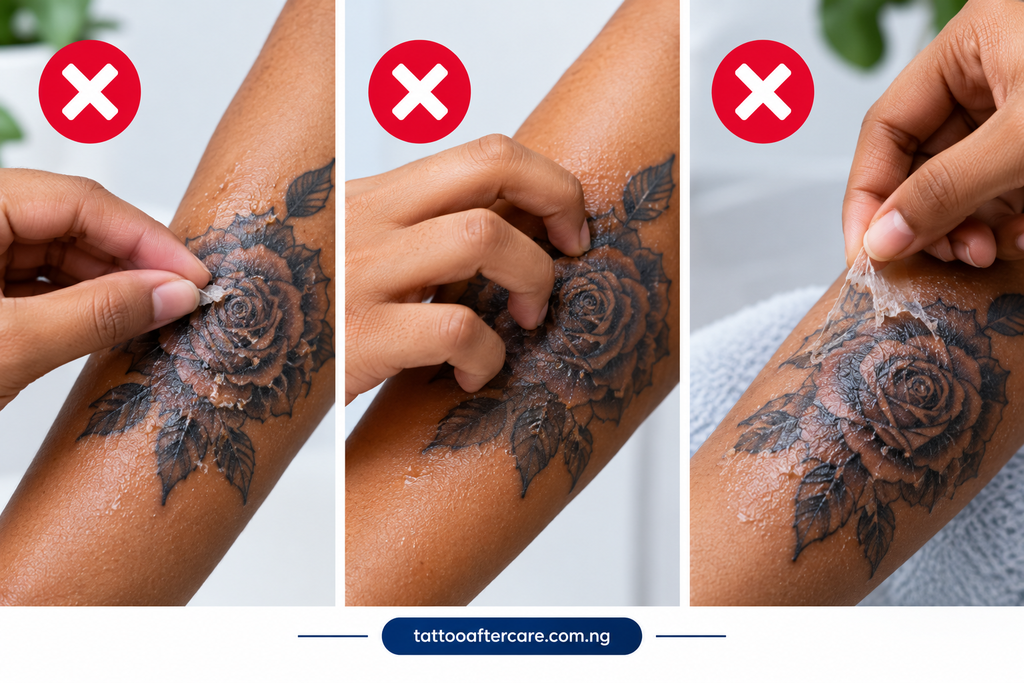
3. Never Pick, Scratch or Peel Your Healing Tattoo
This is probably one of the hardest rules to follow. At some point, your tattoo may itch.
Then it may start peeling. You may see flakes of skin hanging from the tattoo, and suddenly your fingers want to pull them off.
Don’t.
Let your skin shed naturally.
Peeling, itching and some scabbing can occur during normal tattoo healing. Picking at scabs or flaky skin can unnecessarily irritate the area and interfere with healing.
Think about it this way: your body is already working on repairing the skin. Your job is not to speed the process up by removing everything you see.
Your job is to leave it alone. If the itching becomes uncomfortable, follow your aftercare routine and avoid scratching with your fingernails.
4. Keep Your Fresh Tattoo Away From Excessive Sun Exposure
Sun protection is not just something to think about after your tattoo has healed.
It matters for your tattoo’s long-term appearance too.
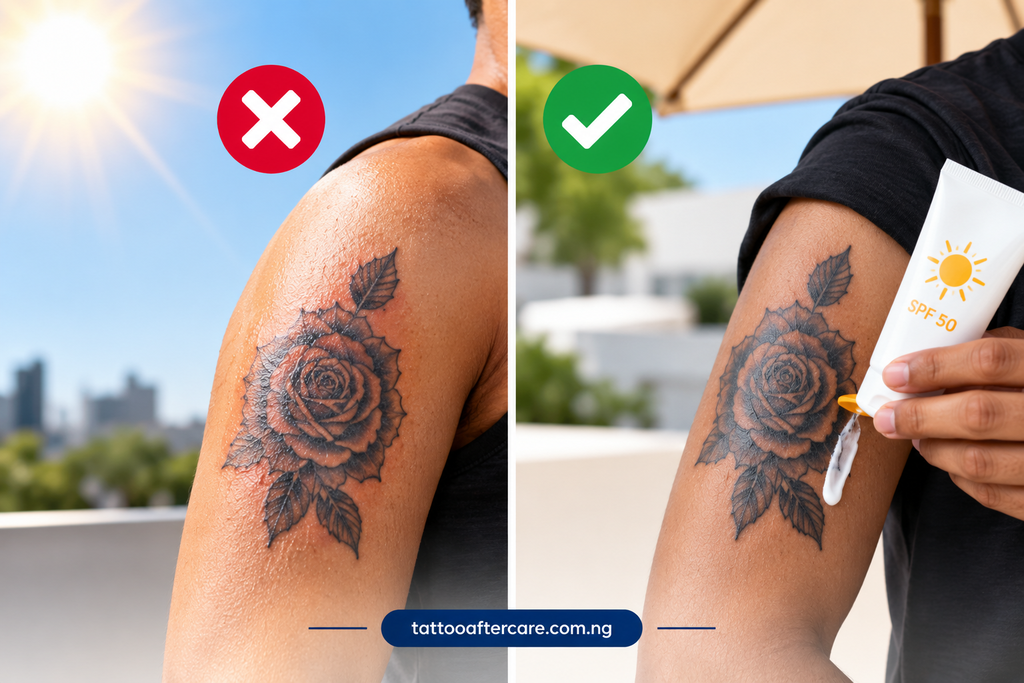
UV exposure can contribute to fading of tattoo pigments. The American Academy of Dermatology recommends protecting tattooed skin from the sun and, once the skin has healed, using a broad-spectrum, water-resistant sunscreen with SPF 30 or higher.
There is an important distinction here:
A fresh tattoo is healing skin. Don’t treat it like fully healed skin.
During the initial healing period, follow your artist’s instructions about protecting the tattoo and avoid unnecessary direct sun exposure. Once the tattoo has healed, sunscreen becomes an important part of maintaining the appearance of your tattoo.
If you spend a lot of time outdoors, this is one habit worth keeping long after your tattoo stops peeling.
5. Don’t Go Swimming With a Fresh Tattoo
If you’ve just gotten a tattoo, you will need to temporarily change your swimming plans.
That means being cautious around:
- Swimming pools
- Hot tubs
- Baths
- Oceans
- Lakes
- Other situations where the tattoo is submerged
A fresh tattoo is healing skin, and prolonged soaking can interfere with the healing process. Cleveland Clinic specifically advises avoiding immersion in water, including pools, hot tubs and bathtubs, while a tattoo is healing.
A normal shower is different from sitting in a bathtub for 30 minutes.
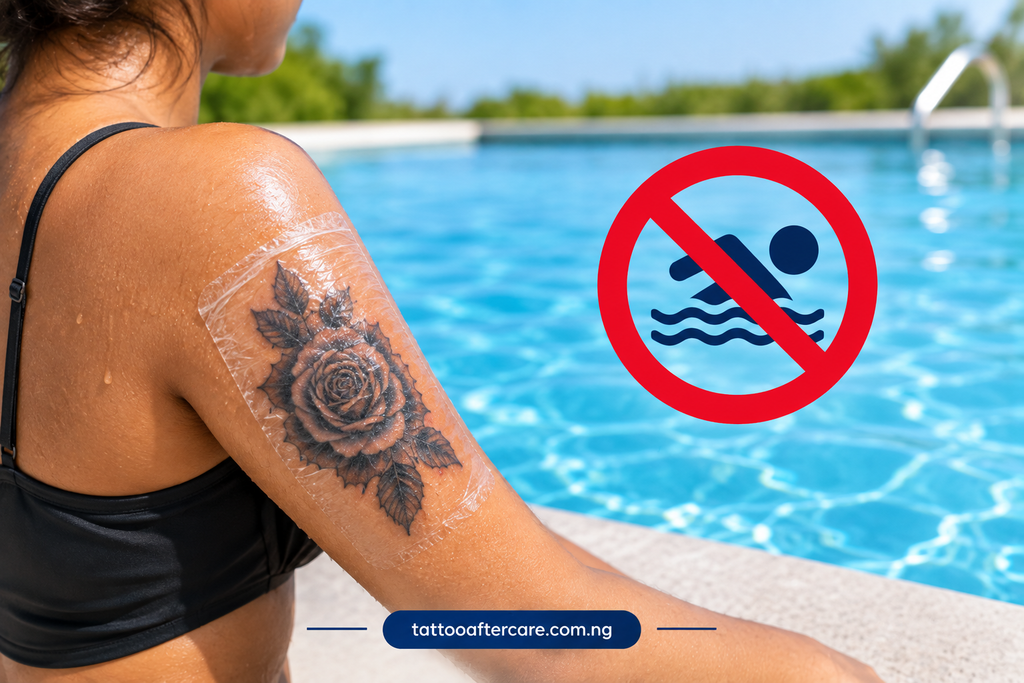
You don’t need to be afraid of water. You need to avoid unnecessarily soaking the tattoo while it heals.
What if I really want to swim?
Wait until the tattoo has adequately healed and follow the specific guidance from your tattoo artist or healthcare professional.
Trying to save one swimming session is not worth unnecessarily irritating a fresh tattoo.
6. Protect Your Tattoo From Friction and Dirty Surfaces
Sometimes tattoo aftercare focuses so much on creams and washing that people forget about something much simpler:
What is rubbing against your tattoo?
Tight clothing can repeatedly rub against fresh tattooed skin. Bedding, gym equipment, dirty hands and other surfaces can also expose the area to unnecessary friction or contamination.
If your tattoo is located somewhere covered by clothing, choose clean, loose-fitting and breathable clothing when possible.
This becomes particularly important when sleeping.
You don’t need to become afraid of your bedsheets or stop moving normally. Just be conscious of excessive rubbing and keep fabrics that come into contact with the tattoo reasonably clean.
Cleveland Clinic also recommends loose clothing during the healing period to reduce unnecessary rubbing and irritation.
7. Pay Attention to How Your Tattoo Is Healing
This is the part of tattoo aftercare I believe people should take more seriously.
Not every red or itchy tattoo is infected. Some redness, soreness, clear fluid, flaking and scabbing can happen during normal healing.
The important thing is to watch the direction of change.
Is the irritation gradually improving?
Or is the pain becoming worse?
Is redness becoming less noticeable?
Or is it spreading?

According to the American Academy of Dermatology, warning signs can include redness that becomes darker or spreads, worsening pain, pus, fever, chills, or painful bumps.
Cleveland Clinic also identifies symptoms such as increasing pain, fever, significant drainage, warmth and spreading redness as reasons to seek medical attention.
If you suspect that your tattoo is infected, don’t try to solve the problem with random products from the internet.
Speak with a qualified healthcare professional.
Tattoo aftercare information can help you understand the healing process, but it should never replace medical care when something appears seriously wrong.
How Long Does a New Tattoo Take to Heal?
There isn’t one exact healing timeline that applies to every tattoo.
The size and location of the tattoo, your skin and other factors can affect how quickly it heals.
Cleveland Clinic notes that the surface of a tattoo may appear healed after several weeks, while deeper layers of skin can continue healing for longer. Larger tattoos may also take longer to fully heal.
This is why I don’t recommend judging your tattoo’s healing simply by looking at whether the peeling has stopped.
A tattoo looking better doesn’t necessarily mean every layer of skin has completely finished healing.
Give it time.
What Does a Normal Healing Tattoo Look Like?
A healing tattoo may go through several stages.
You may notice:
- Mild redness
- Tenderness
- Slight swelling
- Some clear fluid
- Itching
- Peeling
- Flaking
- Scabbing
- Dryness
These symptoms can occur during normal healing.
The key is that concerning symptoms often behave differently.
For example, worsening pain or redness that spreads deserves more attention than mild irritation that gradually improves.
When in doubt, speak with a healthcare professional.
Tattoo Aftercare Mistakes That Can Affect Healing
Sometimes knowing what not to do is more useful than another list of products.
Here are some common mistakes I recommend avoiding:
Scratching the tattoo
Itching doesn’t mean you should scratch.
Picking scabs
Let them fall away naturally.
Over-moisturizing
Your tattoo doesn’t need to be covered in a thick layer of cream.
Soaking the tattoo
Avoid pools, hot tubs and prolonged bathing while it heals.
Excessive sun exposure
Protect healing skin from unnecessary UV exposure.
Wearing tight clothing
Reduce rubbing and friction around the tattoo.
Ignoring worsening symptoms
A tattoo that becomes increasingly painful, hot, swollen or red deserves attention. Make sure you follow this 7 Tips for Proper Healing of Your New Tattoo.
Frequently Asked Questions About New Tattoo Healing
How often should I wash my new tattoo?
Follow your tattoo artist’s instructions. Cleveland Clinic’s dermatologist guidance recommends gentle washing twice daily during the early healing period.
Avoid aggressive scrubbing or repeatedly washing the tattoo throughout the day unless a healthcare professional specifically tells you to.
Can I shower with a new tattoo?
Generally, showering can be part of normal tattoo care, but follow your artist’s instructions and avoid prolonged soaking. Do not treat a shower and a long bath as the same thing.
Why is my new tattoo peeling?
Peeling can be part of the normal healing process. Don’t pull or pick the peeling skin. Allow it to shed naturally.
Why does my tattoo itch?
Itching can occur as tattooed skin heals. Avoid scratching and continue following your aftercare routine.
If the itching is severe, persistent, accompanied by a rash, or occurs with other concerning symptoms, seek professional medical advice.
Can I put sunscreen on a fresh tattoo?
A fresh tattoo is healing skin, so don’t automatically treat it like fully healed skin. Follow your artist’s instructions during healing. Once healed, sunscreen can help protect tattooed skin from UV-related fading. The AAD recommends broad-spectrum, water-resistant SPF 30 or higher for tattooed skin exposed to the sun.
When should I see a doctor about my tattoo?
Seek medical attention if you notice symptoms such as worsening pain, spreading or increasingly intense redness, significant swelling, pus, fever, chills, red streaks or other signs of infection.
Final Thoughts: Give Your Tattoo Time to Heal
A beautiful tattoo doesn’t end when the artist puts down the machine.
The healing process is part of the tattoo.
You invested money, time and trust into getting your artwork done. Give your skin the same attention.
Keep the area clean. Moisturize appropriately. Don’t scratch. Don’t pick. Stay away from unnecessary sun exposure and soaking. Reduce friction. And most importantly, pay attention to changes in your skin.
I created TattooAftercare.com.ng to make this process easier for people who don’t know what to do after leaving the tattoo studio. Our focus is practical tattoo-healing education, personalized aftercare support and helping people understand when a concern may require professional medical attention.




3 responses to “7 Tips for Proper Healing of Your New Tattoo”
[…] For a deeper look at taking care of a fresh tattoo after the session, see our guide on 7 Tips for Proper Healing of Your New Tattoo. […]
[…] 7 Tips for Proper Healing of Your New Tattoo […]
[…] can also read my guide on 7 Tips for Proper Healing of Your New Tattoo for more practical ways to protect your new […]